Pier Pressure: What a Blackpool Fortune Teller Saw in Mona Lisa's Future
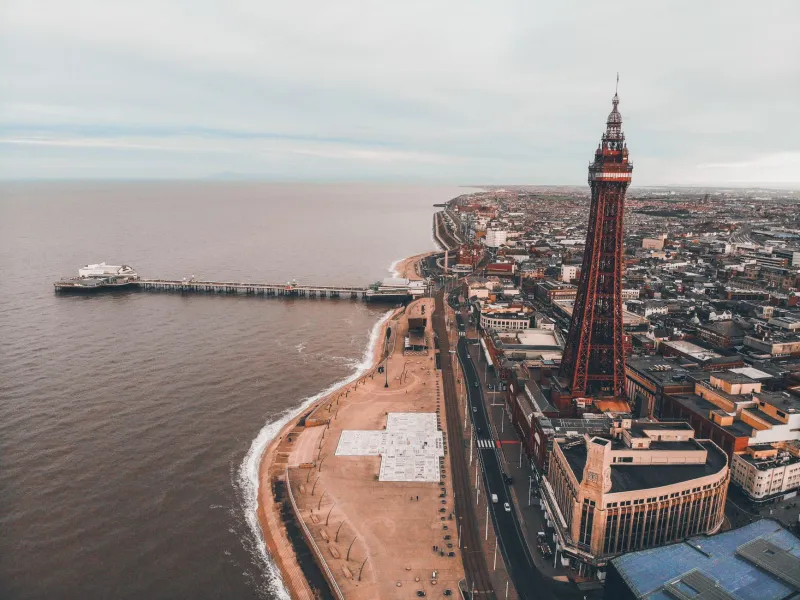
The Pilgrimage to the Pier
On a wet Friday in November 2026 I took a framed print of the Mona Lisa to Blackpool. She travelled first class in a tote bag, which is more than can be said for the rest of us. The plan was simple: a fortune teller on the pier would read her future. I had pier tokens, a £5 note, a flask of tea and the sort of optimism that usually precedes a bus replacement service. The promenade was doing its usual impression of a wind tunnel with chips. The sea was grey. The seagull population was large and confident. The print stayed dry. The smirk stayed smug.
The Consultation
The fortune teller was called Madame Clarrie. Her booth smelled of incense, wet anorak and a plug-in air freshener called Sea Breeze. She looked at the print. She looked at me. 'She's got a lot of nerve,' she said. I explained that this was the Mona Lisa, a 500-year-old painting with a famously enigmatic expression and a sideline in merchandise. Madame Clarrie nodded. 'I can see that,' she said. 'She's not going to tell me anything, is she?' I admitted this was part of the appeal. She shuffled her cards. A card machine blinked. The future, it turns out, takes contactless.
Romance: A Queasy Maybe
Madame Clarrie saw 'a tall stranger with a van' in the cards. Then she saw 'a man who says he is between jobs but has a lot of ideas.' Then she saw a third card and said, 'Actually, he's married.' The Mona Lisa's romantic destiny, apparently, is a lot of queasy maybes. I compared this with my own fortnight: a bus driver who winked at the print, a man on the tram who asked if it was 'one of them AI pictures,' and a seagull that looked at me with what I can only describe as romantic disappointment. Madame Clarrie said the painting would 'never be lonely, but often be misunderstood.' I wrote that down. It felt true of most people on the promenade.
Money: Two Pence and a Wristband
The financial forecast was bracing. 'Money will come from an unexpected direction,' said Madame Clarrie. 'Probably the back of a sofa.' The Mona Lisa, she explained, is not a risk-taker. She is a long-term investor in quiet superiority and overpriced fridge magnets. I spent £2.40 on pier tokens and lost most of them to a machine that promised a rubber duck and delivered a small plastic frog. The frog is now in my kitchen. The Mona Lisa watched. She did not comment. Madame Clarrie said, 'She's got a good face for money. No one knows what she's thinking.' I paid her £15 in cash and tokens. She said the painting would come into 'a small inheritance.' I have not seen it yet.
Weather: Persistent Drizzle
On weather, Madame Clarrie was less mystic and more BBC local radio. 'Rain,' she said. 'Then more rain. Then a seagull.' She was right. Over the next fortnight the Mona Lisa experienced drizzle, sideways drizzle, a brief moment of dry cold, and one seagull incident that I am still not ready to discuss. The print was fine. The seagull was not interested in art. It was interested in the chips of a small child, which it took with the confidence of a Renaissance prince seizing a neighbouring duchy. The child cried. The Mona Lisa smiled. Madame Clarrie said, 'Told you.'
The Seagull Audit
I decided to audit the predictions like a proper investigator: romance, money, weather. Romance: inconclusive, but the bus driver did wink. Money: down £2.40 and one plastic frog. Weather: absolutely correct, with a side order of seagull. The bus home was delayed by twenty minutes due to 'an earlier incident.' A tram went past with a man shouting into a phone about a parcel. The sea was still grey. The chips were good. The Mona Lisa's future, as far as I could tell, is mostly weather, queueing and a mild sense of being watched.
The Return Bus
Madame Clarrie said she had seen worse futures. She said the painting would 'live a long life, travel a lot, and never quite get the credit she deserves.' I said that sounded like most of Blackpool. She laughed. The seagull came back. It looked at the print, then at me, then at a discarded chip. It walked away. The smirk survived. The bus eventually arrived. The rain did not stop. I decided that a 500-year-old painting does not have better luck than the rest of us — she just has a better face for pretending it does. Madame Clarrie waved from the booth. The card machine blinked. The future, apparently, is just the present with more rain.