Keith, the Skip and the Smirk: Notes From a Recycling Centre Renaissance
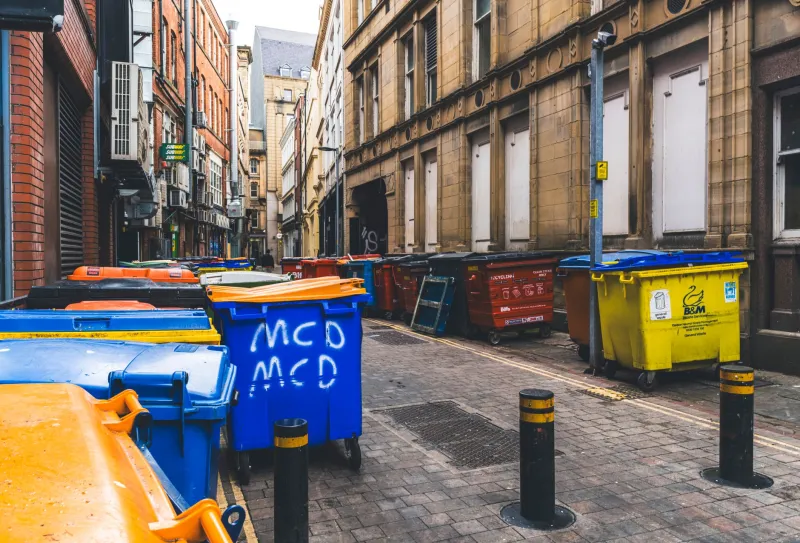
Clocking In: Hi-Vis, Halo, Slight Panic
On the first Tuesday of November 2026 I reported to my local household waste and recycling centre dressed as the Mona Lisa. Not a convincing one, obviously: a framed print tucked under one arm, a dark cloak, and a lanyard that said VOLUNTEER in letters big enough to frighten a pigeon. The supervisor was called Keith. He looked at my face, then at my cloak, then at the queue of cars already forming by the gate. 'You're not insured for enigmatic,' he said. I told him I was there to bring Renaissance calm to wheelie-bin chaos. He told me to bring a hi-vis and stop saying wheelie-bin chaos.
The Queue Is the Masterpiece
The first lesson of the recycling centre is that Britain does not queue for fun. It queues because the alternative is talking to someone. By 9:15 there were four cars, a van with a trailer, and a man reversing with the grim determination of a Renaissance general. Everyone had a booking slot. Everyone was slightly early. Everyone was ready to explain, at length, why their particular bag of rubble was definitely household waste. I tried my enigmatic smile on a woman with a boot full of broken garden chairs. She looked at me as if I had asked her to join a cult. The queue moved one car length. The smile held. Keith sighed.
Keith's Rule of Three Bins
Keith has a taxonomy. General waste, garden waste, hardcore, wood, metal, and the special category he calls 'that's not household waste, mate.' He explained it the way a bishop explains sin: patiently, firmly, and with the sense that you have already disappointed him. My job was to stand by the garden waste skip and look calm. The Mona Lisa smile is not a customer-service smile. It is a silent, superior, slightly constipated expression that says I have seen centuries of folly and I am not going to comment. Keith was immune. 'You're doing the face again,' he said. 'Stop doing the face.' I did the face. He pointed at the sign. The sign said no trade waste. I nodded enigmatically. He walked away.
Recycling Guilt, With a Side of Sfumato
What I had not anticipated was the guilt. Britain has turned recycling into a moral drama with bins. Every car that arrived carried a small confession: a shattered mirror, a dead hoover, a trampoline with a death wish. People whispered their excuses. 'It's only a bit of plasterboard.' 'The wife said it was garden.' 'I didn't know the difference between hardcore and a Henry Hoover.' I tried to bring Renaissance calm to the chaos. I offered one man a serene nod as he wrestled a broken door frame out of a hatchback. He said, 'Are you all right, love?' It was a fair question. I was not all right. I was wearing a cloak in a recycling centre in November.
What the Skip Taught Me
By the end of the fortnight, the skip had become a kind of fresco: broken furniture, old doors, a rusted bike, a garden chair with one leg and a lot of attitude. The composition was chaotic, the lighting was terrible, and the patron had clearly run out of money. In other words, it was very British. The enigmatic smile survived the queue, the rain and a supervisor called Keith, but only just. On my last day Keith said, 'Are you coming back next week?' I said, 'Only if you let me bring a cherub.' He said, 'No.' I smiled. He pointed at the sign. The sign said no trade waste. I left, feeling oddly peaceful. The bins had won. The smirk had held. Keith had a point.