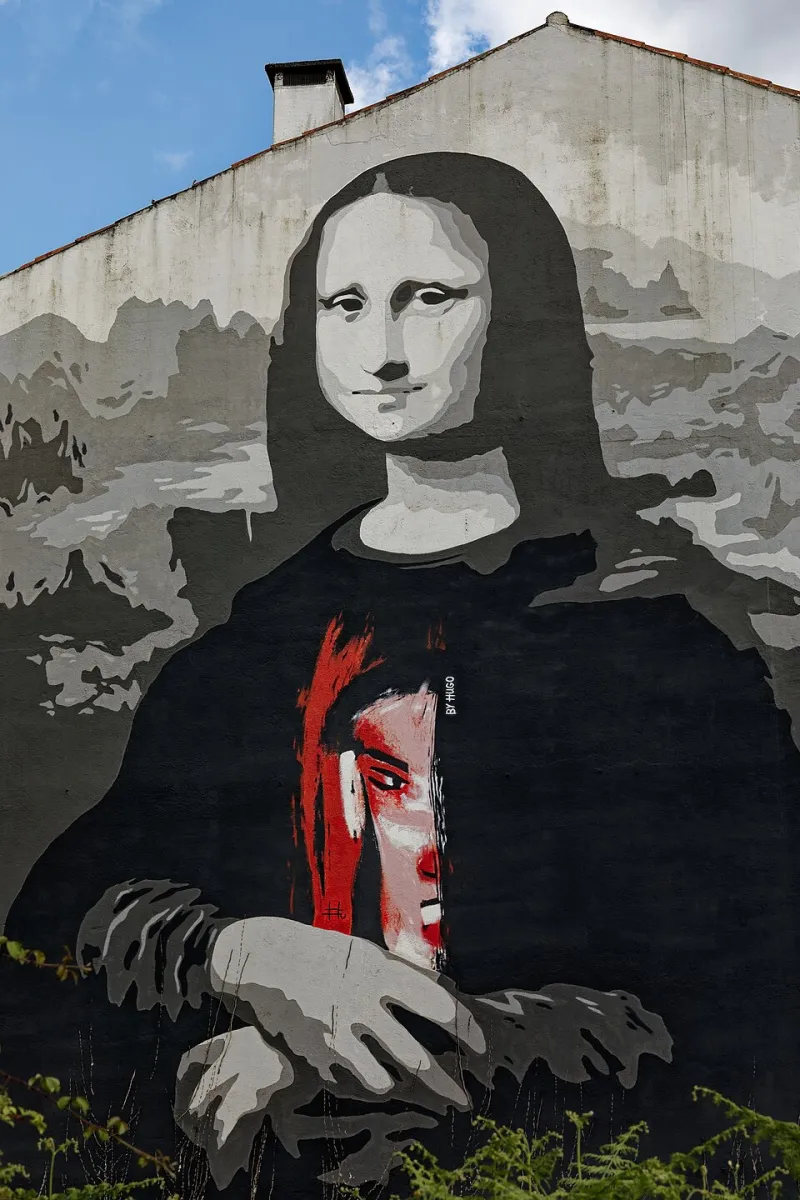
In Praise of Botched Jobs: The Week My Charity Shop Mona Lisa Became a National Disgrace

Photo by Photo by Shuttergames on Unsplash on Unsplash
There is a peculiar British instinct that surfaces the moment we spot something old, faded and quietly dignified. We don't admire it. We don't preserve it. We think: I could have a go at that.
It's the same instinct that gave us the Monkey Christ. In 2012, an elderly parishioner in Borja, Spain, took it upon herself to touch up a crumbling fresco of Jesus, and the result resembled a hedgehog in a wig. The internet wept with laughter. Spain shrugged. And somewhere deep in the national psyche of Britain, a seed was planted: we could do worse than that. Probably. How hard can it be?
So, naturally, I bought a £2 Mona Lisa print from the British Heart Foundation shop on a drizzly Tuesday and handed her over to strangers with craft supplies and no supervision.
The Specimen
Let's be clear about what we started with. This was not the Louvre. This was not even a decent poster. This was a slightly foxed reproduction, possibly from a 1990s gift shop, in a faux-gold plastic frame that had already survived one divorce at least. The varnish had yellowed. The smirk had faded to more of a resigned half-smile — the expression of someone waiting for a bus that's been cancelled.
She was perfect. And like all perfect things in Britain, she had to be improved.
Intervention One: The Tip-Ex Smile
My first volunteer was Dave, a retired plasterer who considered himself "handy with a bit of finishing." He studied the print for a full ninety seconds, tsked at the "dingy teeth situation," and produced a correction fluid pen from his anorak.
The result: Mona Lisa now appears to have no teeth at all, merely a gleaming white void where a mouth once lived. It is, in fairness, the most striking smile in Western art. Dentists hate her.
Intervention Two: The Varnish Incident
Next came Sandra, who "did a bit of decoupage in lockdown" and therefore believed she was qualified to work with adhesives on a global treasure. She decided the print needed protecting and applied a generous coat of PVA glue — the same stuff used to seal glitter onto children's Easter bonnets.
Within minutes, the entire surface had gone cloudy, like the painting had been left out overnight in a Norfolk frost. Sandra called it "an aged patina." I called it a hostage situation.
Intervention Three: The Googly-Eyed Upgrade
I want to be able to tell you I intervened at this point. I want to tell you that a line was drawn. But by now a small crowd had gathered outside the charity shop, and a seven-year-old named Alfie had a vision.
The vision was googly eyes. Self-adhesive. From a pack of four.
Reader, she has never looked more alive. The enigmatic gaze — the thing art historians have written ten thousand words about — has been replaced by two wobbling plastic pupils that follow you around the shop in a manner best described as "unsettlingly keen." Visitors have described her as "the most honest portrait in Britain."
But Why Do We Do This?
Here's the thing. By intervention four — a biro eyebrow, courtesy of a man who'd had "a few shandies" — I'd stopped being upset and started being fascinated. Because this is a deeply British compulsion.
We cannot leave things alone. We restored the Cutty Sark with such vigour she nearly caught fire twice. We "refurbished" a thousand pubs into beige wine bars with the same chairs as every other beige wine bar. Somebody looked at Stonehenge in the 1950s and thought, give it a concrete soak.
There's something almost touching about it. The Monkey Christ lady, Cecilia Giménez, wasn't a vandal — she was a woman who loved her church's painting and wanted to help. Every volunteer who attacked my Mona Lisa did so with genuine belief that they were improving her. Dave genuinely thought the teeth were the problem. Sandra genuinely believed PVA was a varnish.
The smirking lady herself would understand. Five hundred years on, Leonardo's masterpiece has survived a teacup-throwing incident, a wig, and a crown of flowers from various protestors. She's been slapped, glazed, and rehung in a better frame. She endures.
The Verdict
The finished piece — "Mona Lisa (After Everybody)" — now hangs in my hallway, behind a small plaque I made from a lollipop stick that reads DO NOT RESTORE. The cloudy PVA has set into something resembling a Victorian window. The googly eyes remain defiantly attached. Dave's tooth-void smiles out at all who pass.
Is it art? No. Is it worse than the Monkey Christ? Honestly, it's close. But it cost £2, kept six strangers entertained on a wet Wednesday, and raised a fiver for the British Heart Foundation when a bloke insisted on buying raffle tickets to "win" her.
Some things, Britain, should be left alone. But until we learn that lesson, the least we can do is document the disasters — and have a good laugh at them.
The smirk, you'll be relieved to hear, survives. Slightly whiter than intended.